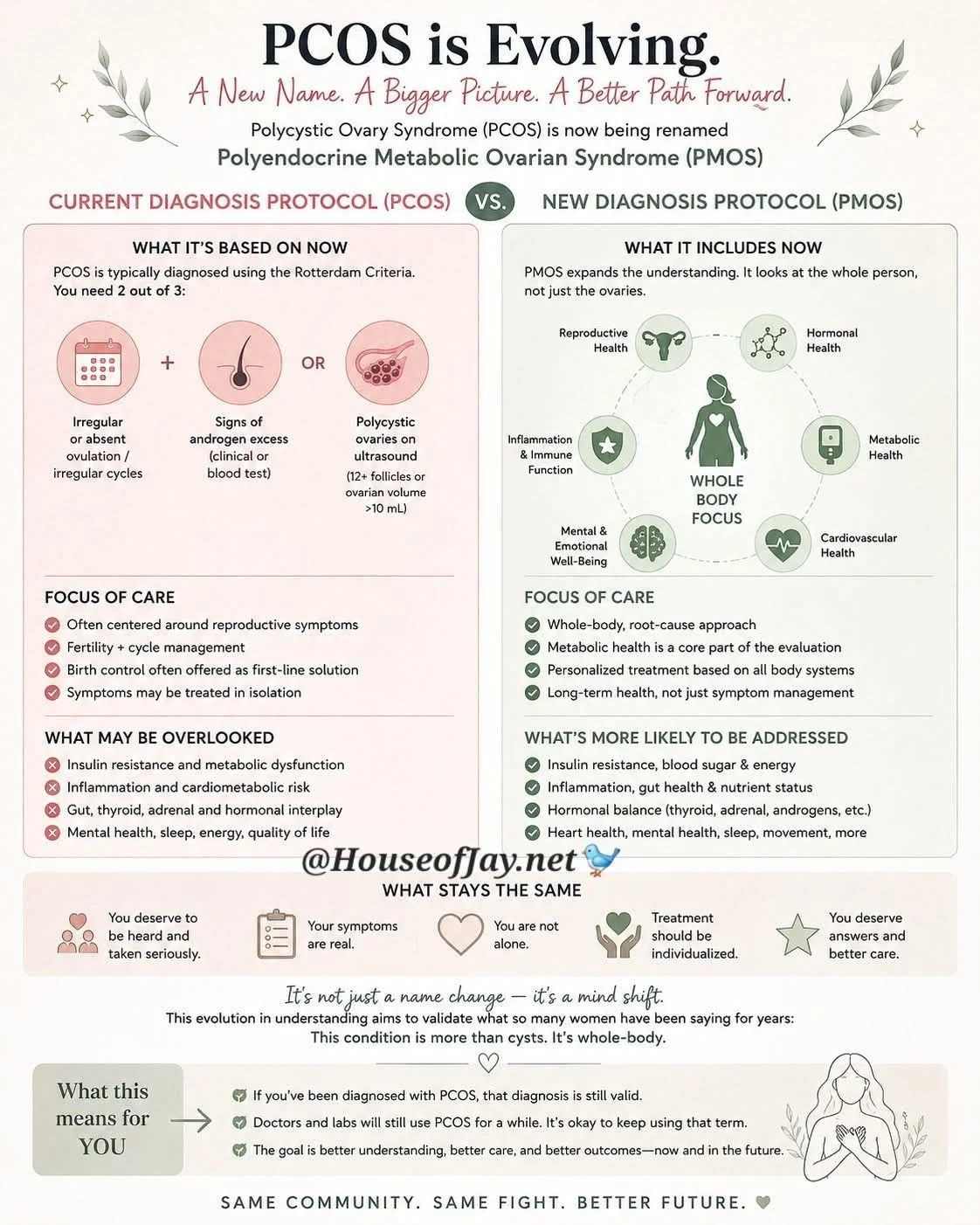
PCOS or PMOS?
Dear Cysters, Mysters, and Friends,
What a week! I have been receiving tons of messages asking about the fact that PCOS has been changed to PMOS.
PCOS - Polycystic Ovarian Syndrome
PMOS - Polyendocrine Metabolic Ovarian Syndrome
Well, here's the thing. The past week has been extremely awful for me fertility wise (you will hear more about this in June), and I have been really focused on that. I haven't had the time or energy to research like I usually do when things like this happen.
So here is a FULL DISCLAIMER. This post will be opinion and social media based. I have not done extensive research on the facts and scientific reasonings yet. What I have done is heard from people discussing their feelings about the name change. I have spent time viewing discussions on multiple forms of social media because I wanted to see all opinions on the topic.
Honestly, I'm glad I did, because I was overjoyed when I first heard the news. However, after letting it sit with me for a minute and reading some of the opinions online, I'm not really sure how to feel about it. So let's talk about it!
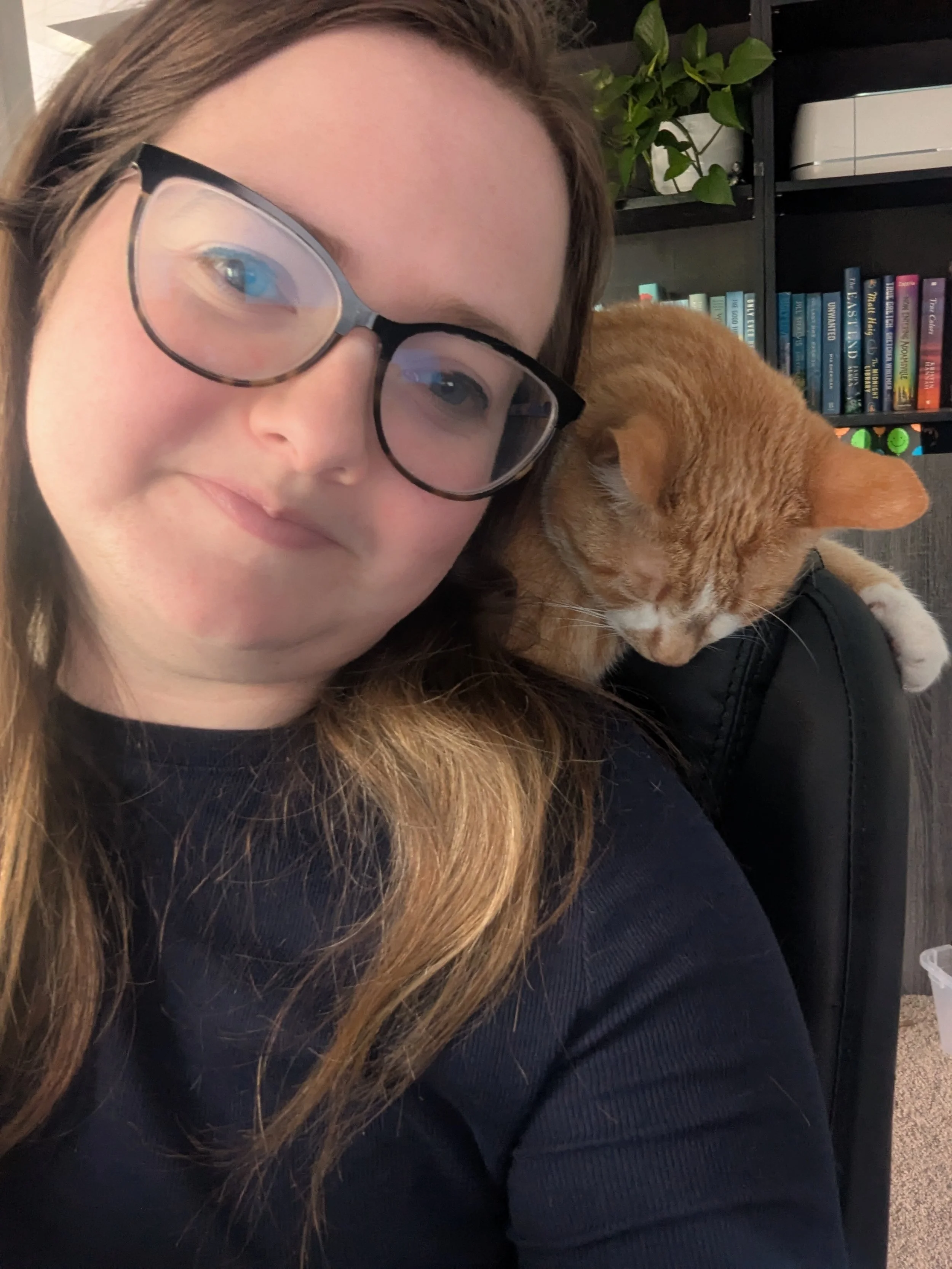
My research buddy, Ella.
More like the “Let me claw your chair until you pick me up and snuggle me” buddy, but basically the same!
Why was the name changed?
The change appears to be a way to recognize that the syndrome is not just an ovarian problem. It recognizes that PCOS/PMOS is a whole-body issue involving the endocrine and metabolic systems, not just cysts on the ovaries.
Who made the change?
A panel of people from all over the world including researchers, people in the medical field, and patient advocates. This change took about 14 years to make!
What's the expectation?
The current expectation is that all medical documentation, textbooks, training, and guidelines will change to PMOS by 2028.
What's the goal of the name change?
The goal of the name change is to recognize that PCOS/PMOS is not just about cysts. You currently don't even have to have cysts to be diagnosed with it. There are a lot of hormone issues that cause people to be diagnosed with it. It is also supposed to bring awareness to the fact that patient care cannot revolve around just the reproductive system, when the whole body has issues.
So what are the opinions online?
Well - there's a lot of them! I'm going to share the ones that stuck out the most to me, even if I don't agree with all of them. I also will be sharing some of my own that have formed over the last few days.
To start, there's a lot of excitement around the name change, especially from people who don't have cysts and have been trying to get a diagnosis. The name is more inclusive and seems more welcoming to those in the community that don't have the only symptom that was recognized under the name Polycystic Ovarian Syndrome - cysts.
Many people feel that this is a step in the right direction for women's health. I saw a lot of comments mentioning other women's disorders, such as endometriosis and adenomyosis, that they feel also need updating in the healthcare system. The acknowledgement that it isn't “all in our heads” is huge for women everywhere, even for those don't have a diagnosis. There is a large amount of hope surrounding the idea that we might start to receive better care, and for good reason.
Currently, can be very hard to get insurance companies to cover anything that has to do with PCOS. This does depend on your insurance, but in my personal experience, insurance companies have, and will, deny something as basic as bloodwork because the code had to do with PCOS or fertility.
PCOS/PMOS can have a lot of the same symptoms as diabetes, but since we aren't diagnosed with diabetes, the same healthcare and symptom management can be denied by insurance companies. That's a big change with moving to PMOS because the name itself recognizes that we will need help with things like hormone management, insulin resistance, cardiovascular health, mental health, and other things that have nothing to do with ovarian cysts.
One of the biggest things I'm seeing online is that people are feeling seen and heard by this name change. For years, too many women have been shouting into a void that we need better care. Many of us, including me, have been turned away from doctors and told to come back when we want kids.
Literally, a week ago, I went to a new endocrinologist who looked at all my hormones that were out of range and said:
“I don’t know what you want me to do about this. You have PCOS, so these numbers are because of that. You just need to eat better and exercise more.”
She didn't even take the time to ask me what I eat in a day! Not only that, but when I tried to fight to get more testing done on my hormones, her response was “Why would you want to look at that?”. After I shared my concerns with how elevated some of my numbers have been in the past, she actually had the nerve to ask me, the patient, what my plan was to regulate those hormones.
Things like this happen all the time to so many people. We are talked to like we have no idea what's going on in our bodies, but here's the thing, we do! I believe this is why many people in the community are happy about this. For decades we have been told it's all in our head, and the name change is proof that it's not.
However, there are also a large percentage of people online who are not happy about this change.
One of the more popular opinions I read was that it doesn't feel like progress to spend 14 years coming up with a new name when that time could've been spent finding a cure. This is demonstrated in the many comments and videos describing how it feels like more false hope. Yes, the name changed, but will doctors actually listen to us now? To some people, this doesn't feel like enough.
Another (very valid in my opinion) thing I noticed was some people are upset that after 14 years, the best acronym they could think of is only one letter away from PMS, which is often used in jokes to dismiss women’s emotions or concerns. On the topic of it being close to the name of a “woman problem”, some women are concerned that once you take the cysts out of the name, that research will be focused on how the disorder can impact other genders, even though the name still has the word Ovarian in it.
Why is this a valid point? Well, there have been studies done on how endometriosis impacts our male partners, even though most women I talk to with endo feel the world is not educated on what endometriosis is and how to treat it.
There's a lot of concern over losing awareness and advocacy because of the new name. Many feel, including me, that PMOS doesn't exactly “roll off the tongue” the way that PCOS does. After years of people like me finding identity with the acronym PCOS and creating a community around it, it is scary to think about posting events with the acronym PMOS because I don't think people will recognize it as much.
For our nonprofit, it means the literal name of the nonprofit isn't accurate anymore. And honestly? Stomp Out PMOS just doesn't have the same feeling to it. So for now, our name will stay Stomp Out PCOS! Next year, when I have to renew the nonprofit, I will be spending some time with the community to find a name that everyone feels is inclusive, has a good flow, and will help continue to raise awareness.
While spending time online looking at all of this, a little red flag kept popping up in my head that I want to share with you, even though I know some will disagree.
As I was reading, the concept of getting Ozempic and other GLP-1 medications covered by insurance kept coming up. People seem extremely happy about this part of the name change, because now that it focuses on the metabolic part of the disease, the hope is that insurance companies will cover more, including weight loss medications. As someone who doesn't want to be on GLP-1 medications, this concerns me slightly.
I worry that they will become the new “birth control” for PCOS. So many women were told that birth control could solve their PCOS issues, but for most people it doesn’t. With PMOS, I worry that they won't try and solve the actual problem and instead will label weight loss medications as a “fix all”, just like they do with birth control. In the last 3 months, I have had two different doctors try to urge me to try Ozempic after I went to them with weight gain concerns, and when I said no, the level of care I received decreased or completely stopped.
As someone who doesn’t love the connections between the decreasing health in our country, Big Pharma, and the quality of our food, I am massively concerned that this new name will allow the cycle of eating heavily processed food, not being able to lose weight, and the focus being on medications instead of a lifestyle/medication combo to continue at a rate we haven't seen before.
Want to learn more about what I’m talking about above? Check out the following documentaries!
What the Health - Netflix
Fed Up - YouTube & Amazon Prime
No matter how you feel about it, it all boils down to one thing. We all want proper care. We are tired of being ignored. We are tired of being told to eat better and exercise more. We are tired of not being believed. We are tired of our diagnosis being an umbrella that other symptoms can get thrown under instead of actually looking into the problems. In general, I think we are all pretty. damn. tired.
While you may or may not agree with this name change, I do want to share something interesting that came out of this research. Before last week, the estimated number for PCOS diagnosis was 1 in 10. When the announcement came out about the name, it was also stated that PCOS/PMOS now impacts an estimated 1 in 8 women. If you, like me, are 1 in 8, welcome to Stomp Out PCOS!
I'm so glad you are here, and I hope you find a community here that you feel is safe and welcoming. No matter how you refer to your body and your diagnosis, you will always be welcome here. I hope to see you all at one of our next events!
With love and support,
Madison Spears
PS - Thank you to houseofjay.net for this awesome graphic!